
Pullets & Egg-Laying Hens
CODE OF PRACTICE FOR
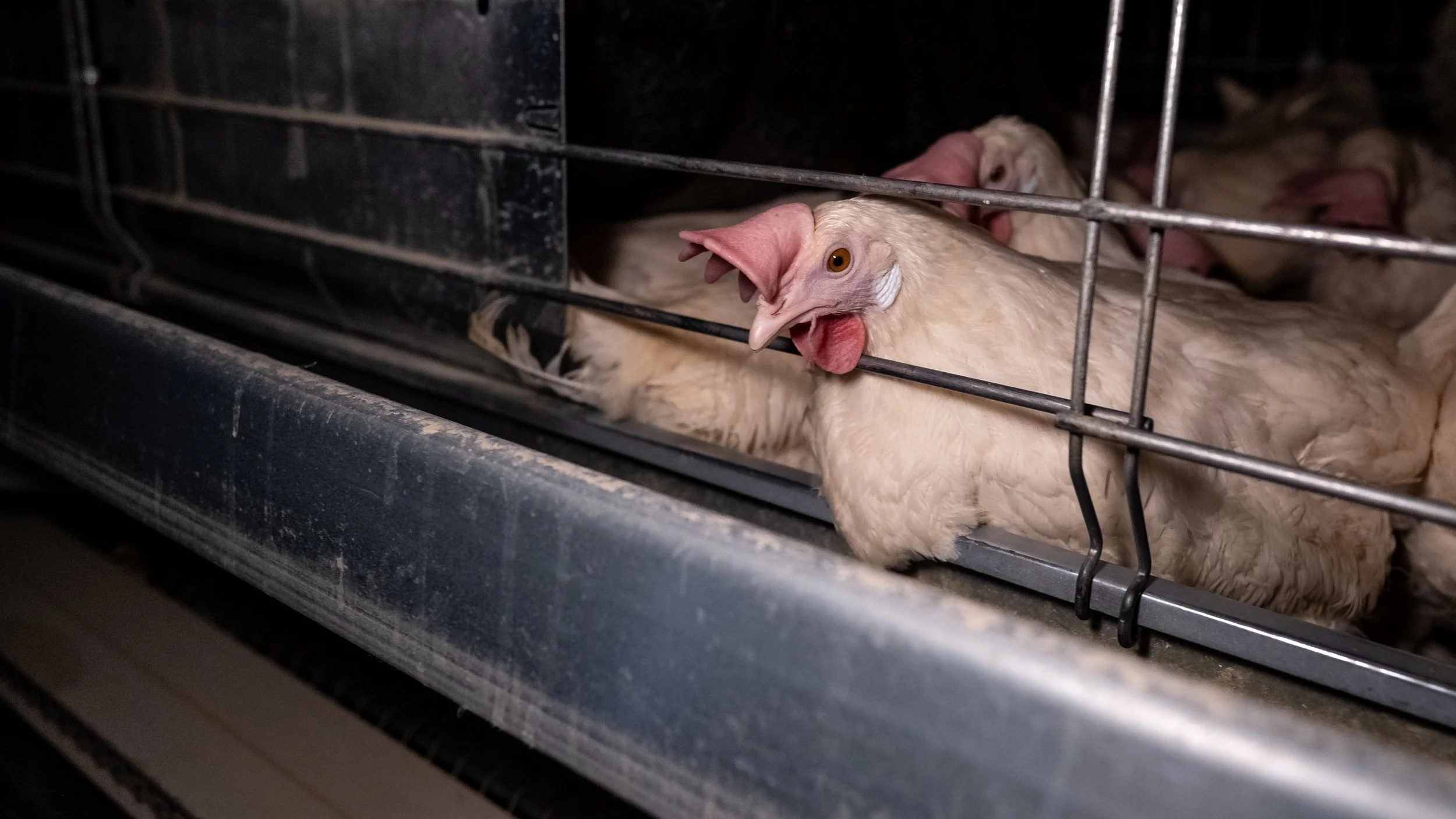
Canada’s Layer Code of Practice continues to endorse one of the most outdated and cruel systems in modern farming: confining laying hens in cages for their entire lives.
Rather than pushing for a real transition to cage-free farming, the Code delays change. After acknowledging the welfare concerns with conventional battery cages, the industry-led NFACC Layer Code adopted a 20-year timeline to phase them out, allowing their continued use until 2036, while also promoting a shift to so-called “enriched” cages. Despite the 2017 Layer Code noting that “enriched” cages do not fully support natural behaviours like foraging and dust bathing, these cages are still permitted and promoted as the main alternative. In practice, they are only marginally larger than conventional cages, and still subject hens to lifelong confinement, severe movement restriction, and chronic suffering.
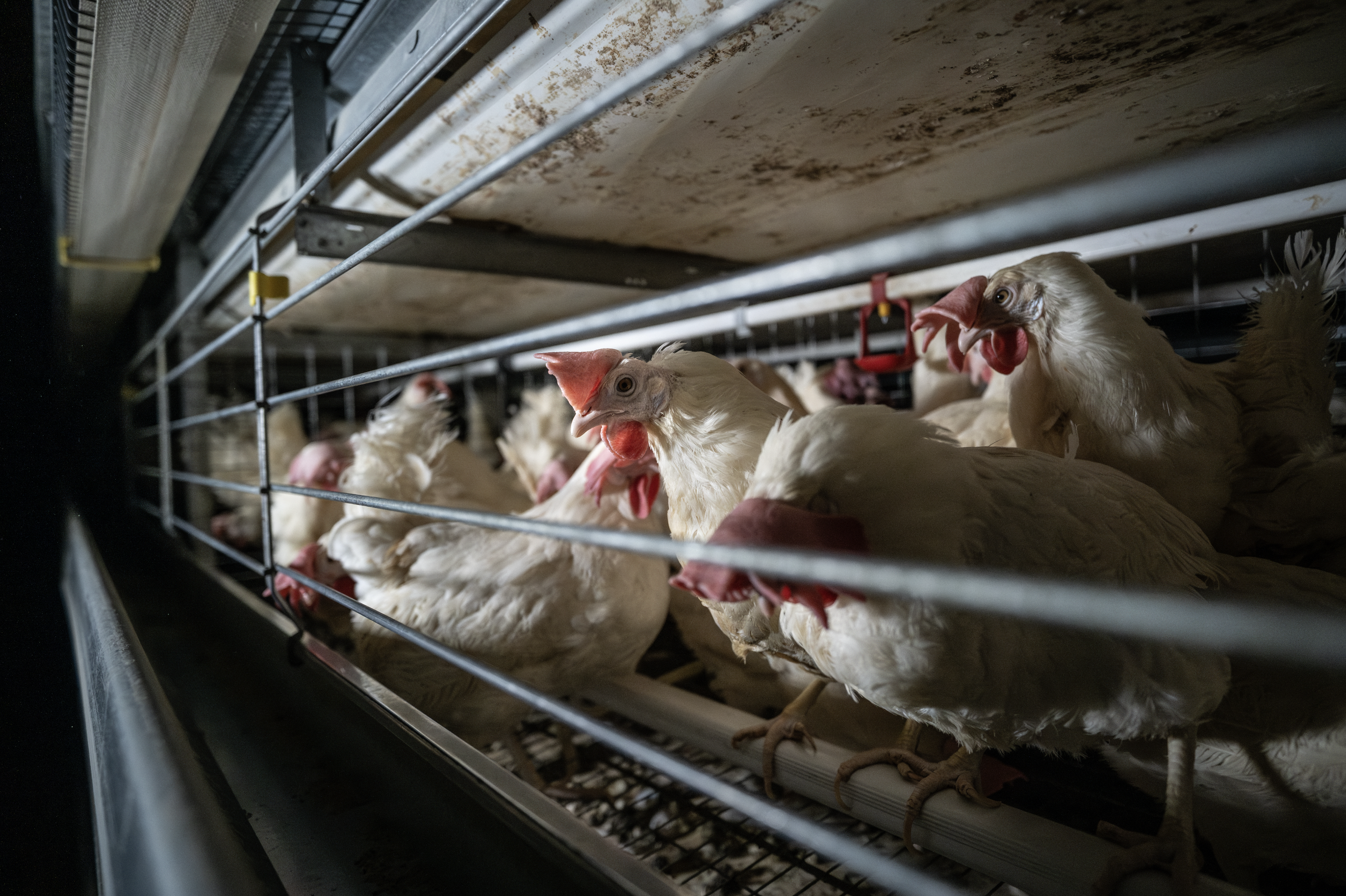
"Enriched” Battery Cages
Despite the label, “enriched” cages offer little meaningful improvement for animal welfare. They drastically limit essential behaviours like:
Running
Jumping
Wing-flapping
Perching
Dust-bathing
Nesting
This deprivation leads to weak bones, painful physical conditions, and profound psychological stress. Hens are denied even the most basic expressions of natural behaviour.
Global animal welfare experts agree that cages—of any kind—are unacceptable. Even the industry-led Global Coalition for Animal Welfare has stated that all cage systems, including enriched cages, severely restrict behavioral freedom and prevent hens from expressing highly motivated behaviors. A study commissioned by the European Parliament also identified the inability to forage and dustbathe as two of the most critical reasons to transition away from cages entirely.
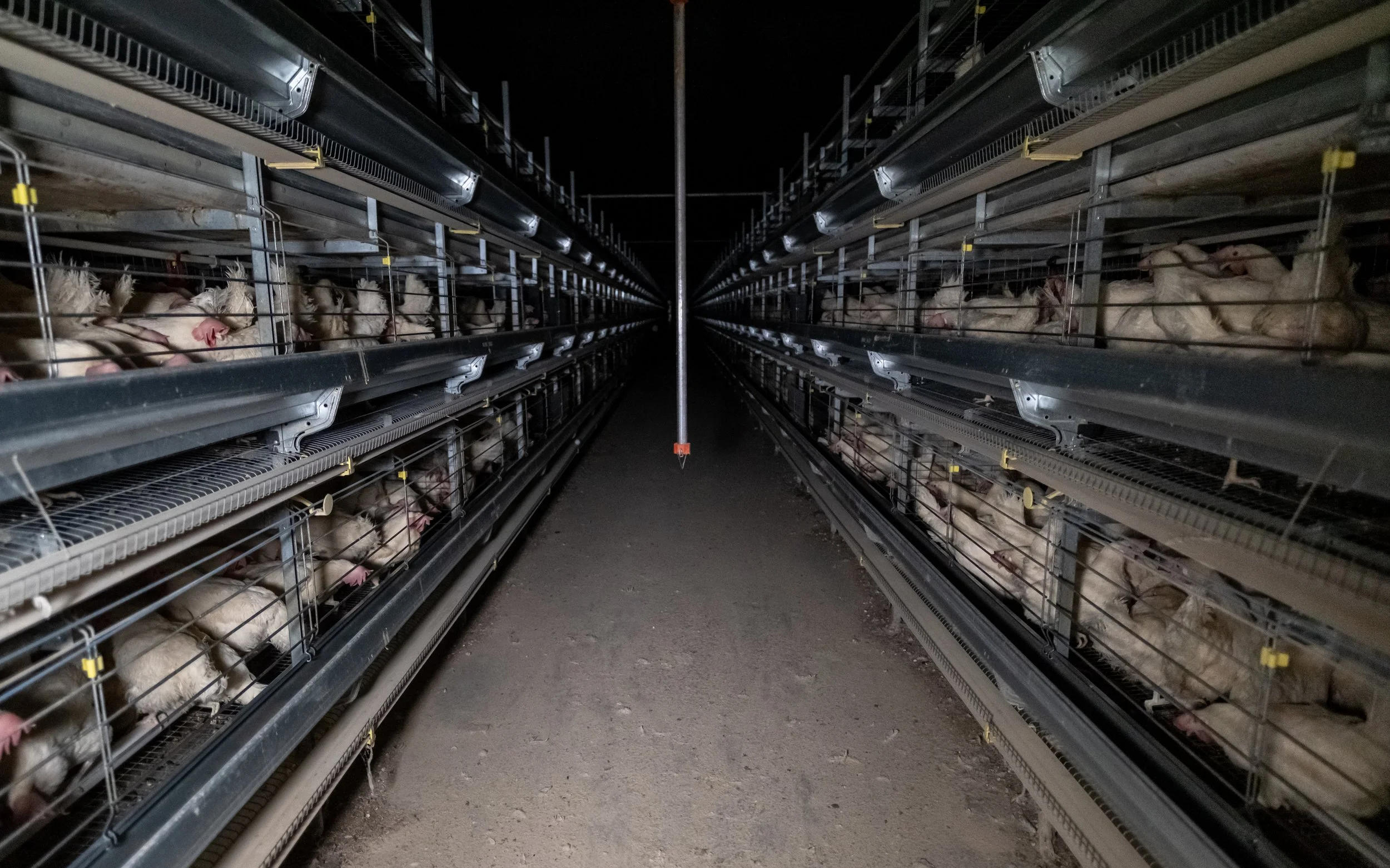

Canadians are far ahead of the Layer Code.
Public opinion consistently shows strong opposition to caging hens, especially when people learn what confinement actually looks like.
Undercover investigations have further exposed the cruelty behind caged egg production, increasing public demand for cage-free systems.
Over 75% of Canadians oppose caging hens entirely.
83% of Canadians are more likely to buy cage-free eggs after learning about confinement.
And around the world, governments and companies are responding:
More than 27 countries and numerous U.S. states have banned cages for laying hens, and some have gone further by banning the sale of eggs from caged systems altogether.
The European Union is moving toward a landmark law that would ban all cage systems across its member states.
Countries like Switzerland, Luxembourg, Austria, France, Czechia, and Slovakia have already acted or are in the process of phasing cages out entirely—leaving Canada far behind global standards.
The global food industry has also largely embraced cage-free sourcing, with over 2,600 corporate commitments worldwide and nearly 90 percent of past pledges already fulfilled. Yet in Canada, major grocery chains have reversed course. After committing in 2016 to stop selling eggs from caged hens by 2025, they backtracked in 2021, choosing to defer to NFACC’s weak standards instead. The result is continued confinement for millions of hens—and a broken promise to the public.
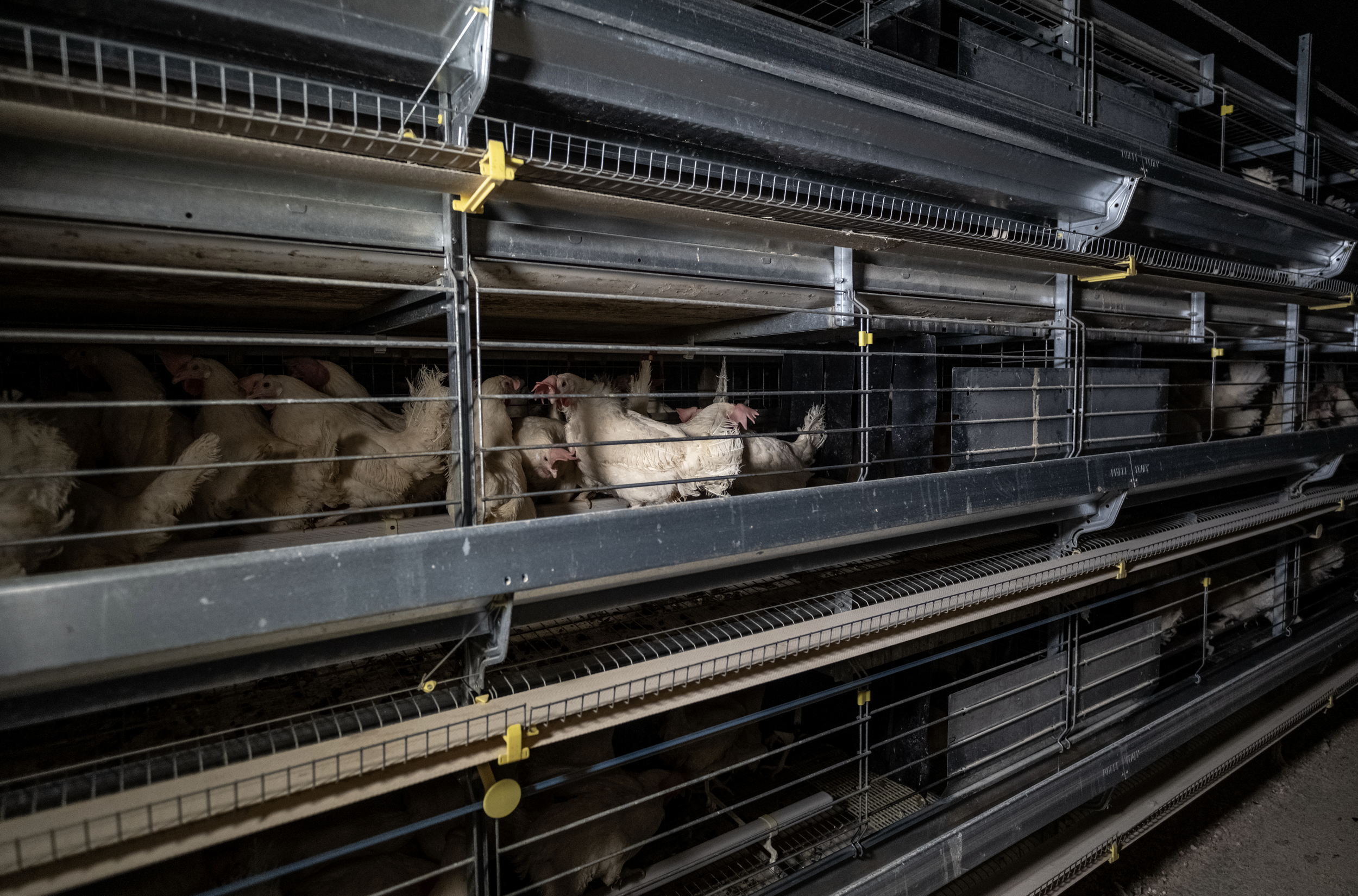
Inside Canadian Egg Farms:
2026 Burnbrae Farms
Animal Justice
2025 Golden Valley Supplier
Animal Justice
2024 Enriched Cages Across Canada
Animal Justice