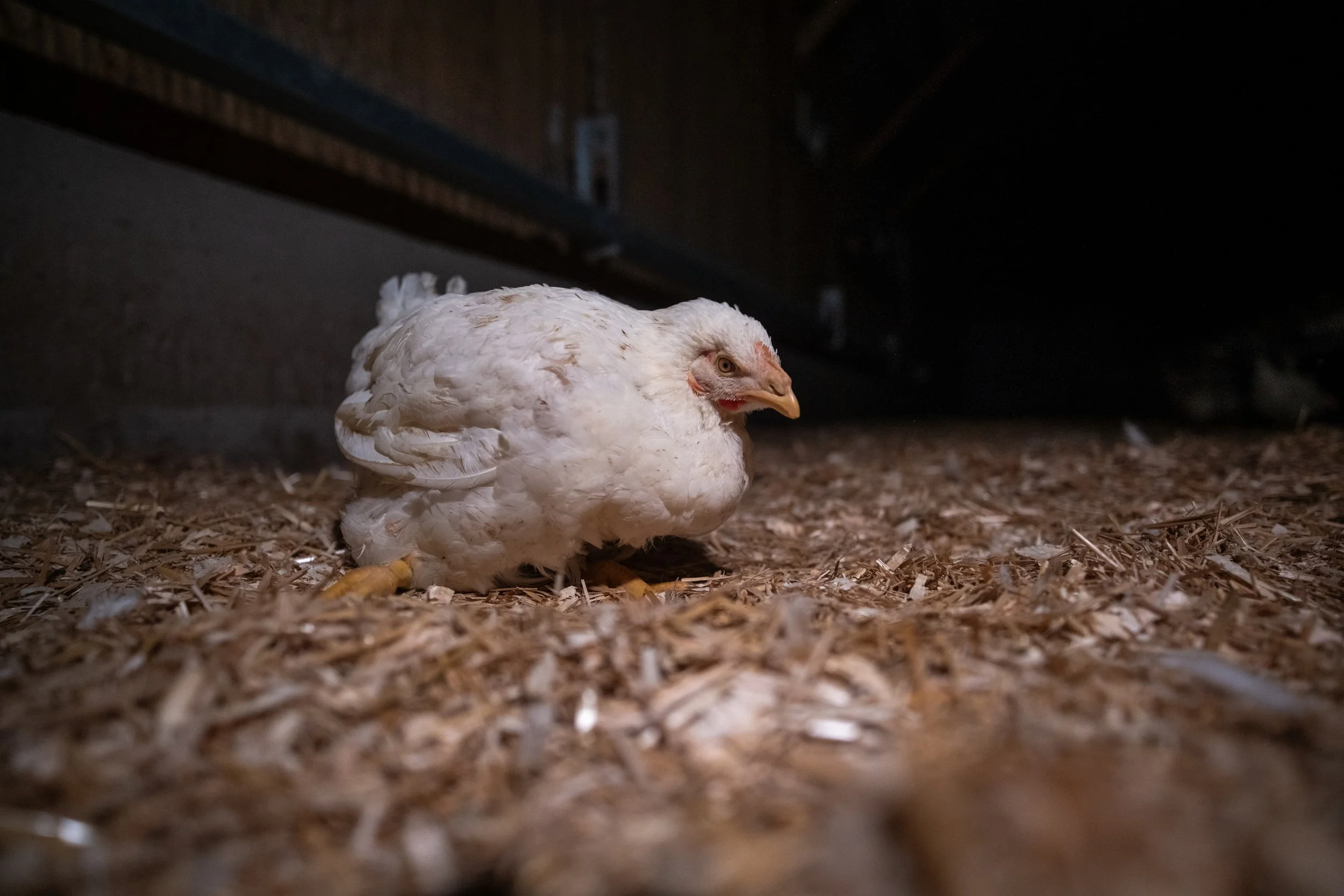
Canadians Want ChangeCanadians expect that farmed animals are afforded meaningful protections such that they aren’t made to suffer, but the reality falls far short. Most Canadians want stronger protections for animals grounded in contemporary science and ethics. Polling data has shown that:
94% of Canadians believe animals’ physical and psychological needs should be met

80% are dismayed that Canada confines more egg-laying hens in cages than the United States.

A clear majority, 68%, also say animal welfare should come before low meat prices.

Only 21% of Canadians consider gestation crates for pigs humane, and just 18% believe conventional battery cages for chickens are acceptable.
A Better Way Forward
Canada urgently needs bold, achievable reform to restore regulatory integrity, independent oversight, and public confidence in farmed animal welfare. Fixing it means not just raising basic standards, but also overhauling the institutions that create, implement, and enforce them.
1. Comprehensive Federal Legislation
Canada urgently needs federal legislation to establish consistent, enforceable minimum standards for farmed animal welfare.
Such legislation would recognize animals as sentient beings, set positive duties of care, prohibit cruel practices, and allow regulations to evolve over time in response to advances in scientific knowledge and changing societal expectations.
This approach aligns with international precedents and would make animal welfare a core national responsibility rather than a voluntary, fragmented system.
2. National Farmed Animal Welfare Committee
Canada must reform and modernize how farmed animal welfare standards are developed. An independent, legislated national farmed animal welfare committee would ensure standards are evidence-based, transparent, enforceable, and developed in the public interest, with balanced representation and mandatory review.
International models show this approach works, and without it, animal welfare standards will continue to prioritize industry convenience over animals’ well-being.
3. Independent Federal Governance Structure for Animal Welfare Oversight
Canada must also establish independent governance structures responsible for overseeing animal welfare policy and ensuring that these laws and standards are implemented consistently.
Currently, oversight largely sits within departments focused on agricultural production, creating a conflict of interest that weakens protections and delays reform. Separating animal welfare oversight from agricultural promotion would improve accountability, strengthen policy coherence, and ensure welfare is treated as a core public policy objective.
Two approaches could achieve this:
A Minister of Animal Welfare
A Commissioner of Animal Welfare
A dedicated Minister responsible for animal welfare would provide leadership at the Cabinet level and integrate welfare considerations across government decision-making. An independent Commissioner of Animal Welfare, reporting to Parliament, would monitor implementation, assess enforcement, and provide transparent, evidence-based oversight.
International experience—including in Austria, Germany, the United Kingdom, and Malta—demonstrates that independent governance improves the credibility and effectiveness of animal welfare policy. Adopting similar structures would align Canada with global best practices and ensure both political leadership and independent scrutiny within a national framework.
4. Strong Government Enforcement and Compliance Mechanisms
Animal welfare laws are meaningless without strong enforcement. Canada must establish an enforcement system that is specialized, transparent, and capable of addressing systemic non-compliance.
Enforcement should be carried out by trained inspectors with authority to conduct unannounced inspections, issue compliance orders, and take action against serious or repeated violations. Two approaches could achieve this:
A dedicated federal animal welfare enforcement agency reporting to the Minister of Animal Welfare
A specialized enforcement unit within the Canadian Food Inspection Agency with a clear mandate and dual accountability to the Minister of Animal Welfare as well as the Minister of Health
Enforcement must be backed by meaningful penalties capable of deterring violations, including substantial fines, compliance orders, license suspension, and animal seizure when necessary. Regular public reporting on inspections, violations, and compliance trends is also essential to maintain transparency and public trust.
Together, these measures ensure that legislation and standards translate into real improvements, complementing governance and legislative reforms to create a consistent, accountable national system.
Canada needs real animal welfare protections—grounded in law, enforced by government, and accountable to the public—not voluntary standards shaped by those with the most to gain from a lack of regulations.