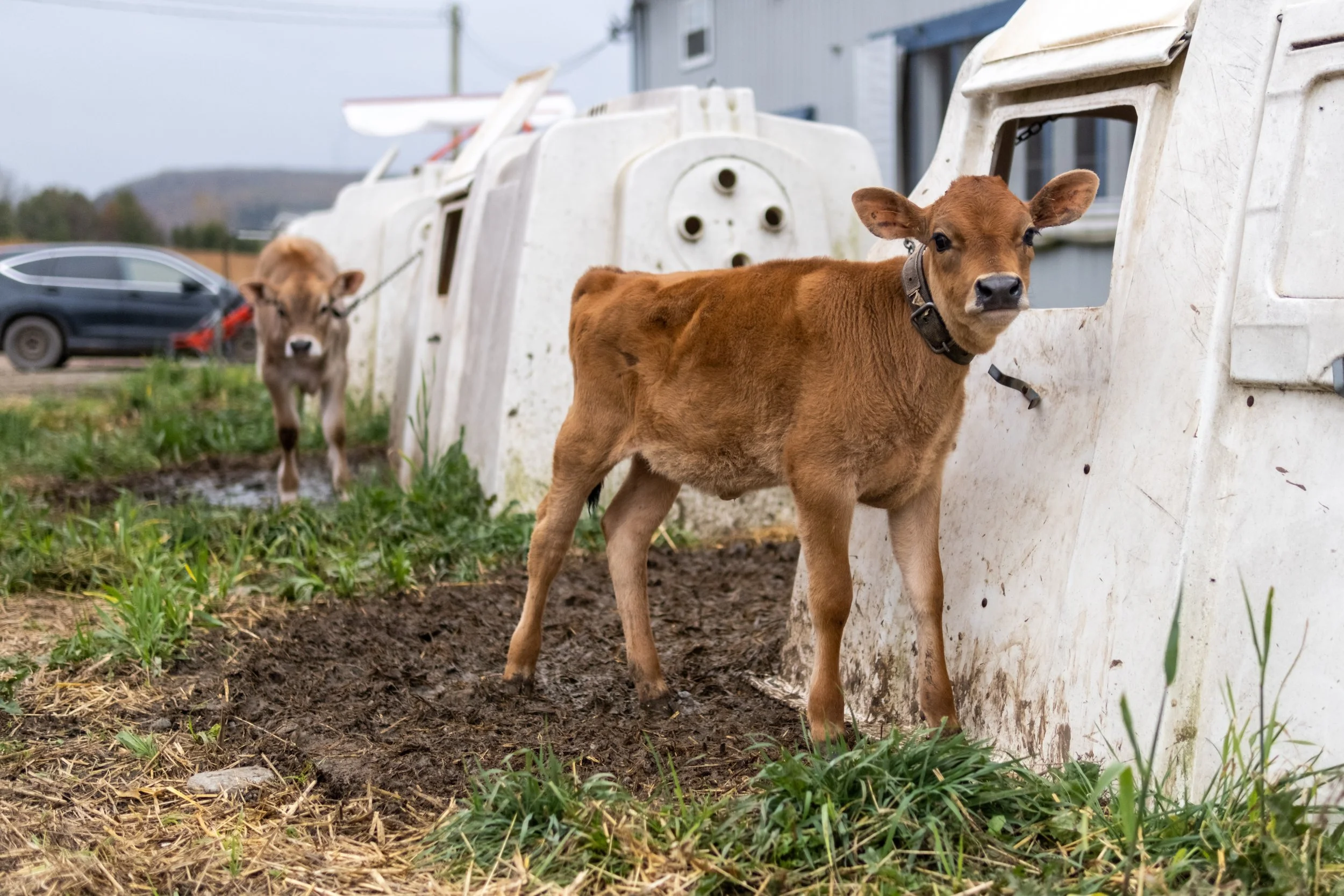
CANADA IS FAILING FARMED ANIMALS
Most people assume that Canada has laws to protect animals on farms, but behind the closed barn doors, there is a staggering legislative void. Canada has no legislation regulating how animals are treated on farms. This has led to a near-total absence of government oversight, allowing an animal industry-dominated private entity, the National Farm Animal Care Council (NFACC), to fill the void.
The Reality for Farmed Animals in Canada
Animal agriculture in Canada operates on a massive scale, with nearly 863 million land animals slaughtered for food in 2024 alone, and millions more dying on farms, in hatcheries, or during transport.
Throughout their lives, farmed animals endure crowded confinement, painful routine procedures without adequate pain relief, and severe health problems caused by intensive breeding systems.
These practices reveal an agricultural system that prioritizes productivity and profit over animal welfare at every stage of life.

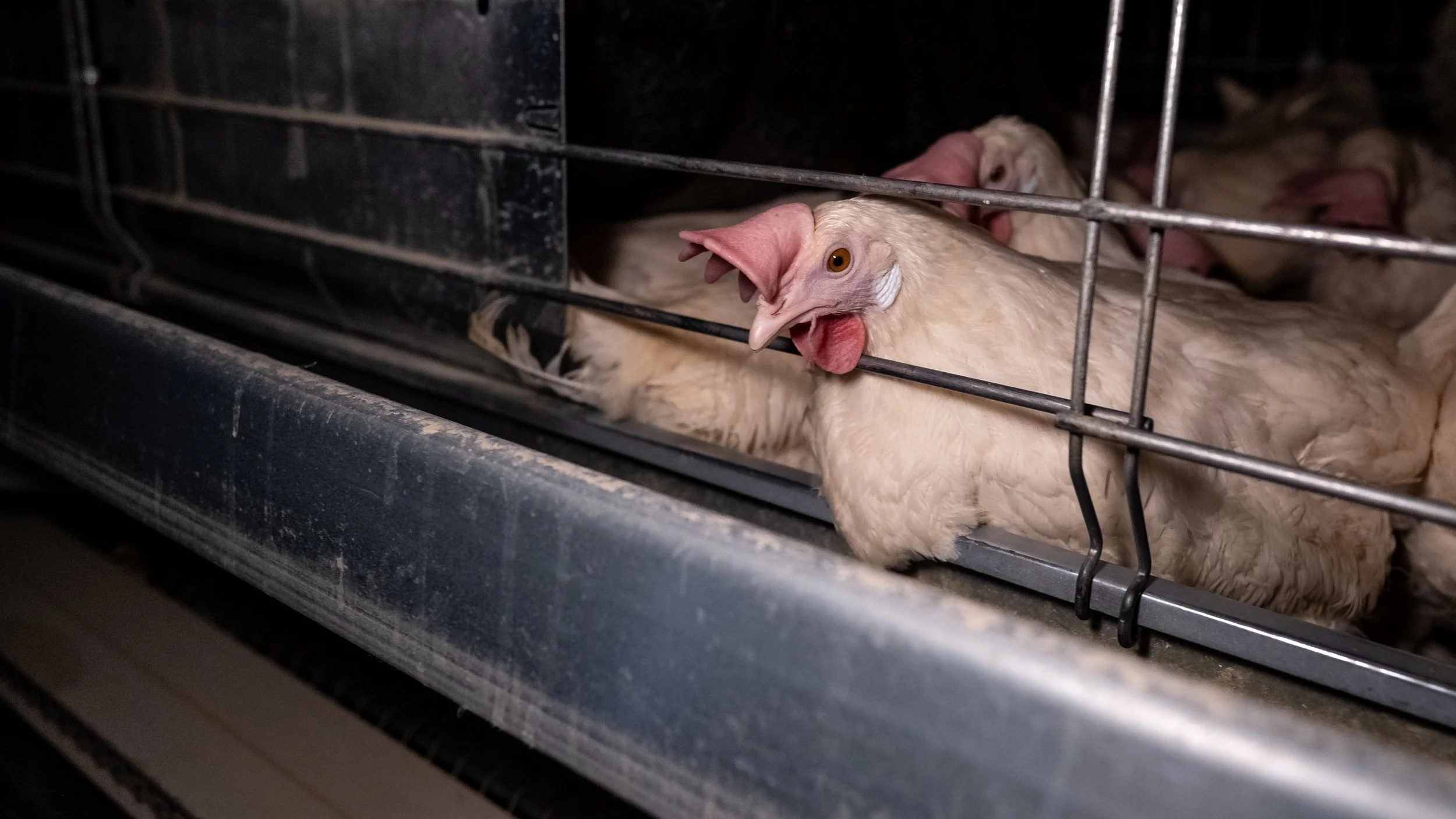
Canada Has No Laws regulating the welfare of animals on farms.
NFACC Fills The Void.
What is NFACC?
NFACC presents itself as a neutral, independent authority creating legal requirements for how animals are treated on farms, but this is an illusion. NFACC membership is dominated by the animal agriculture industry, has no lawmaking or enforcement power, limited public accountability, and produces only voluntary guidelines rather than binding legal protections.
NFACC is the only organization of its kind that allows the farmed animal industry to lead and dominate a process that oversees animal welfare on farms.
NFACC Membership
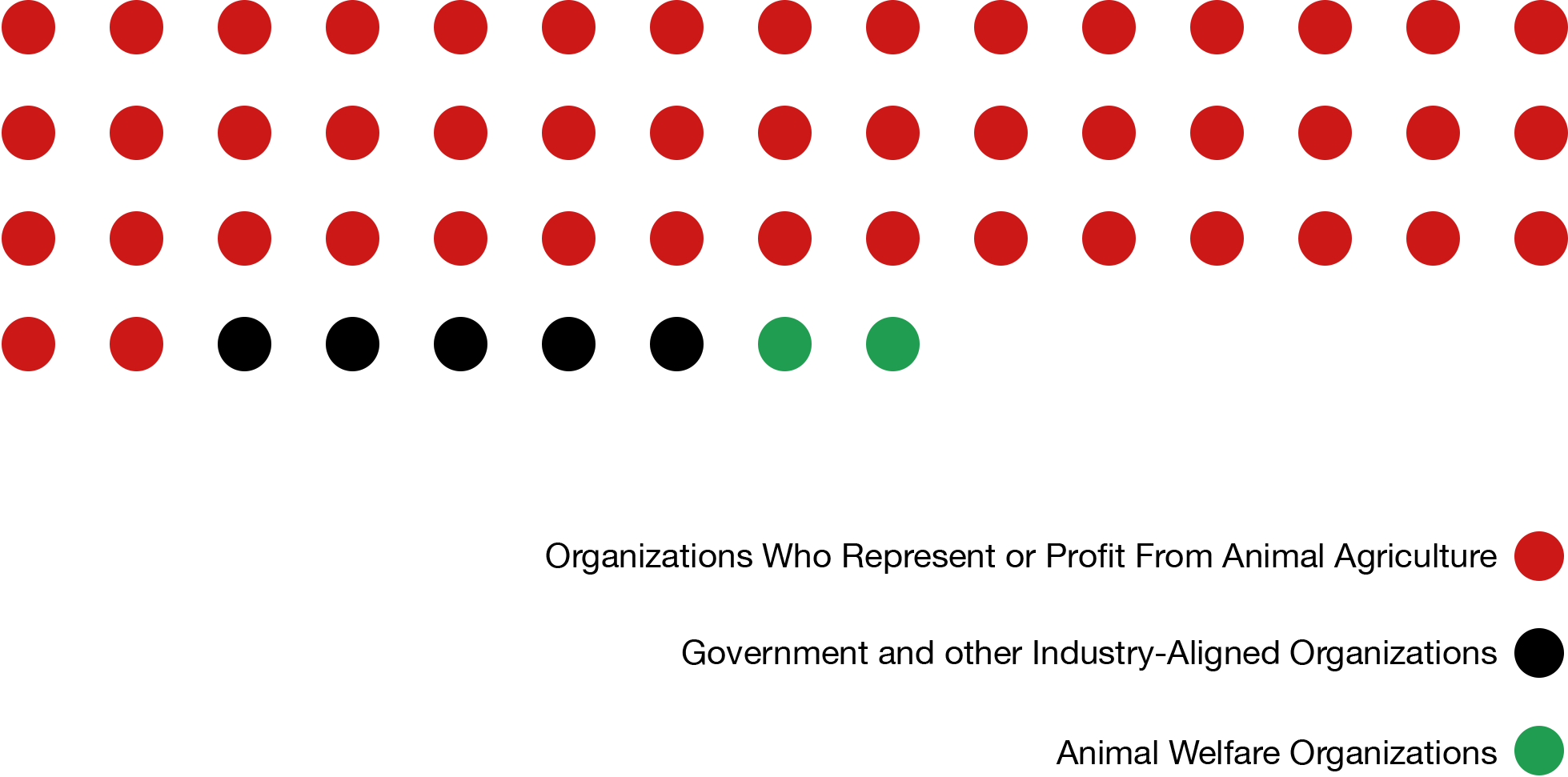
Out of 54 members, only two represent animal welfare organizations. The remaining 87% represent animal agriculture and entities with related commercial interests—including powerful trade groups like the Canadian Pork Council and the Chicken Farmers of Canada, major food companies, restaurant chains, and grocery retailers.
In practice, this means the industries most financially affected by animal welfare standards are the ones writing them. Animal welfare advocates are routinely outnumbered and pressured to compromise just to secure minimal improvements. What’s presented by NFACC as collaboration is, in reality, industry control.
Unlike most progressive countries that protect farm animals through enforceable laws, Canada relies on a publicly funded, industry-led body whose so-called collective decision-making process results in non-binding Codes of Practice written and approved by those who profit from animal use, masking a deeply unequal system behind the language of consensus.
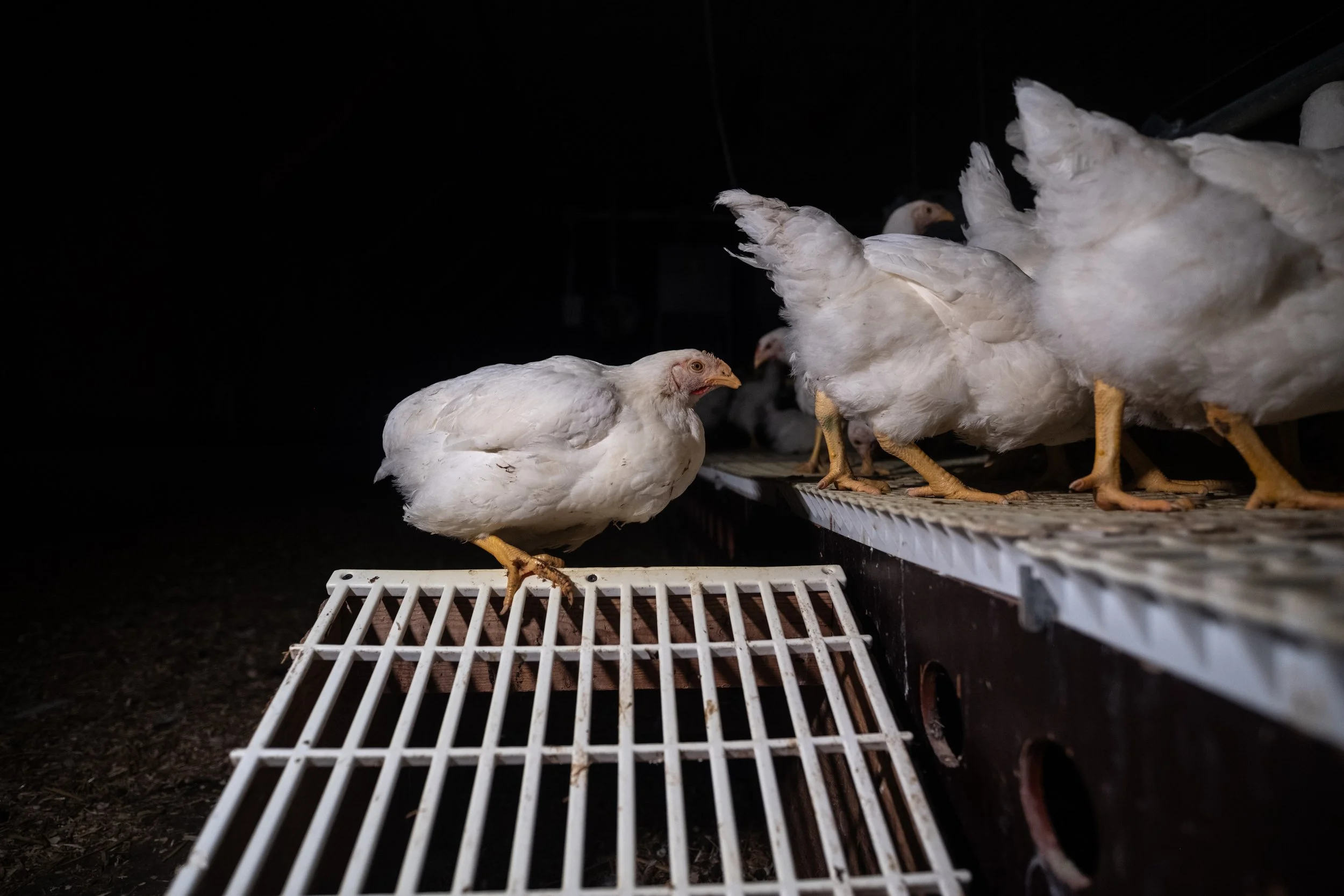
Codes of Practice
NFACC creates recommendations for the treatment of animals on farms through species-specific Codes of Practice.
Despite the authoritative sounding name, these Codes largely reflect what industry is willing to do—not what science, independent animal welfare experts, or the public expect as the bare minimum standards of care for animals on farms.
NFACC has overseen the development of Codes for nearly every major farmed animal sector in Canada. These Codes claim to set “requirements” and “recommended practices” for how animals are housed, fed, managed, and killed on farms.
On paper, this sounds thorough. In reality, the process is designed to maintain industry control.
Explore the Codes:
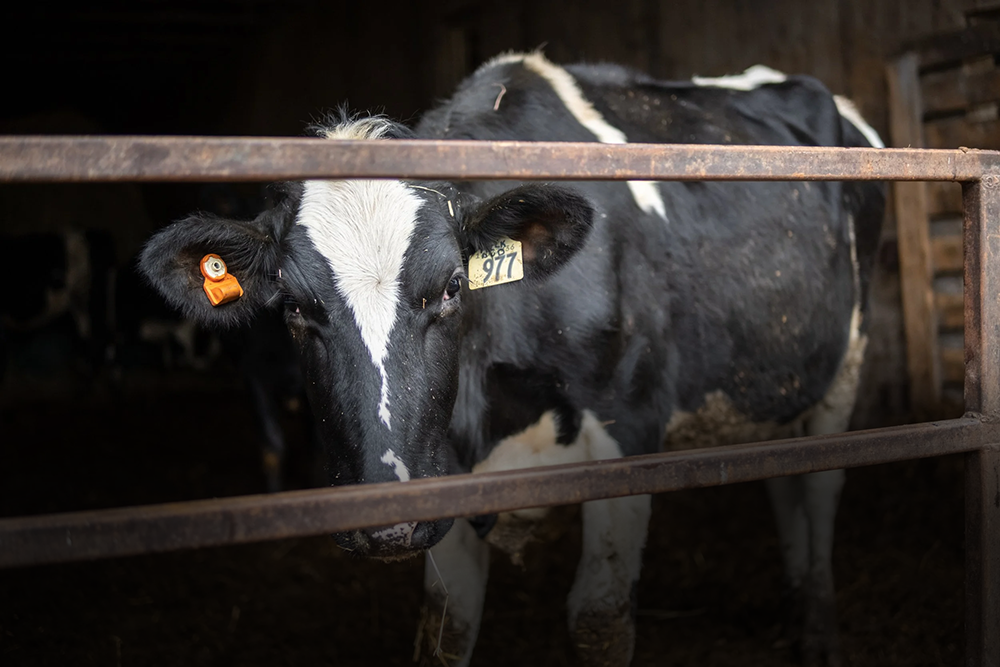
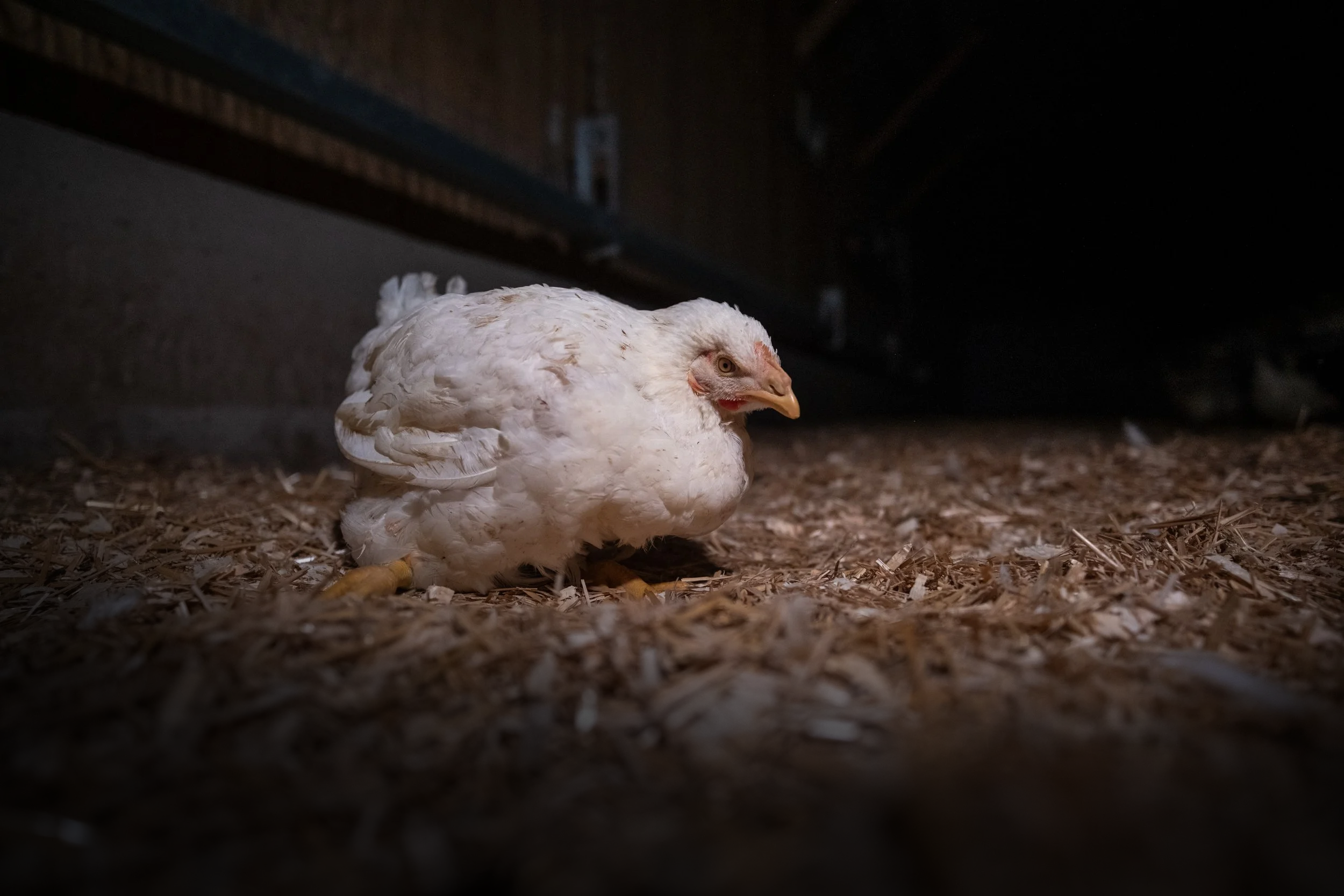
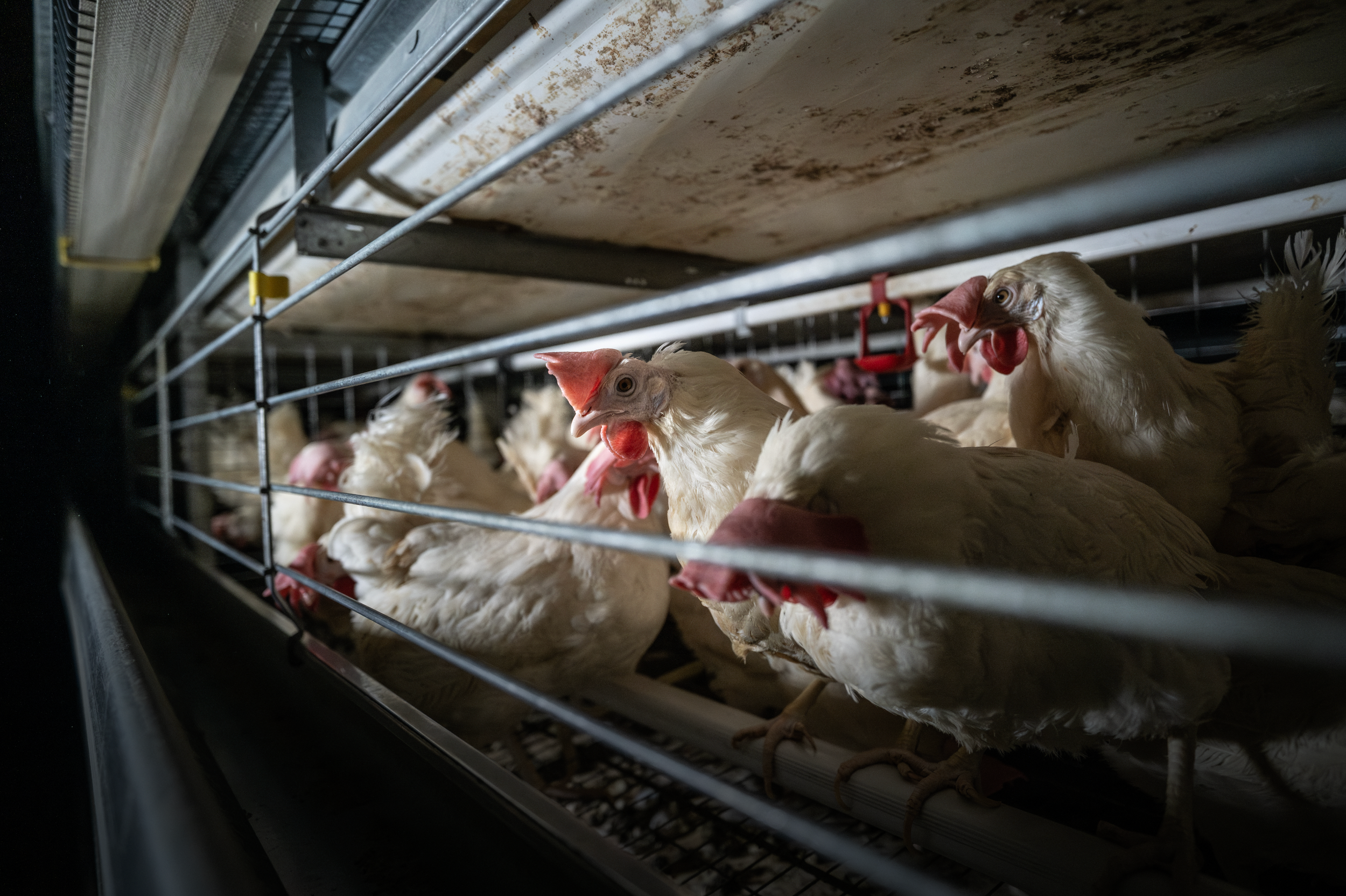
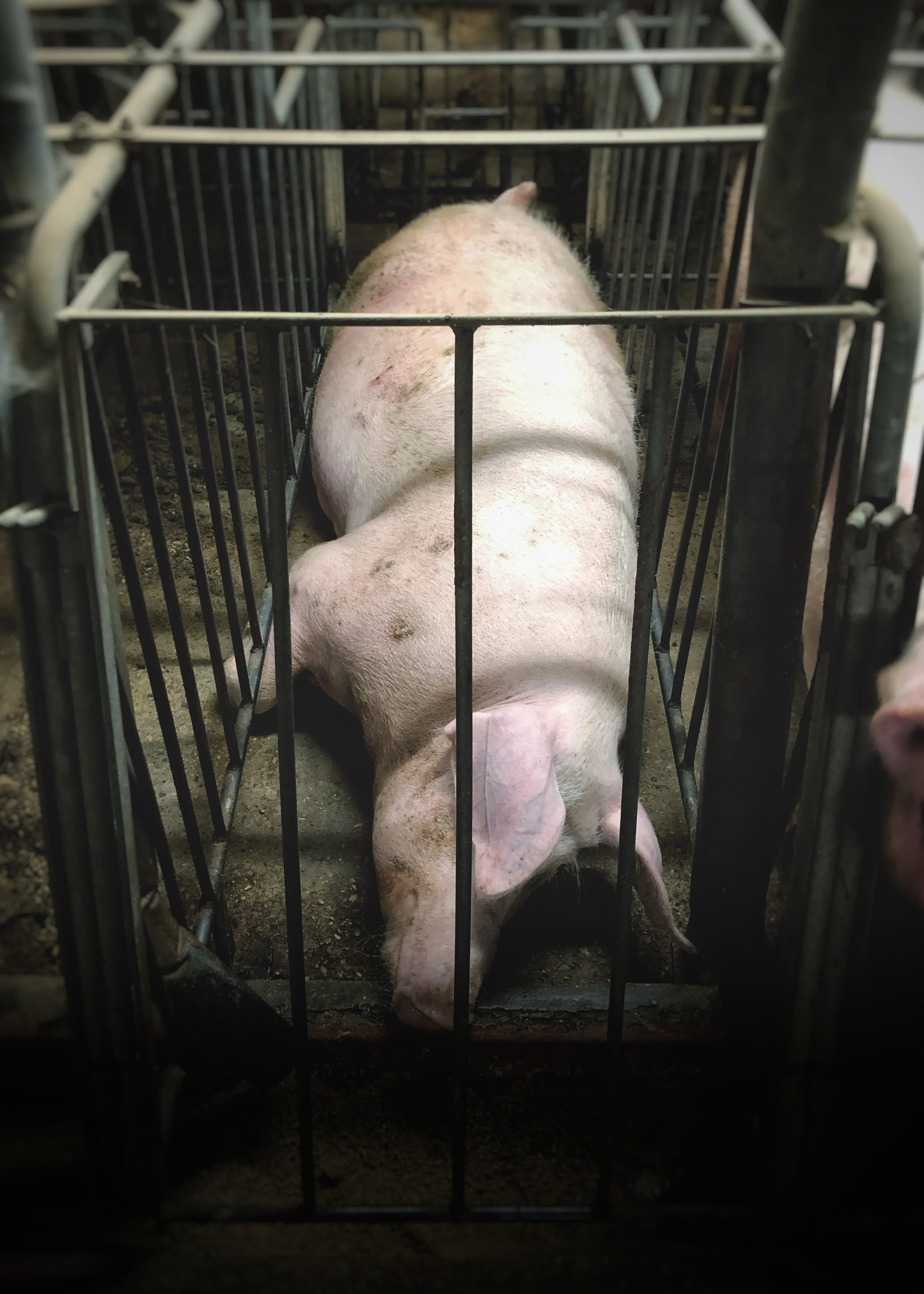
Why is NFACC Harmful?
Reason #1: An Inherent Conflict of Interest
The Code Committees are dominated by people with direct financial stakes in animal agriculture. On a Code committee of 15 to 18 members, animal welfare organizations are routinely limited to a single seat, while producer and industry representatives hold the majority of positions across the committee.
Even Scientific Committees, tasked with providing a summary of research relating to animal welfare issues to the Code development committee, often include individuals with direct or indirect financial ties to the industries under review.
NFACC’s own membership criteria further entrenches this imbalance. Organizations are only eligible to participate if they do not oppose animal agriculture and accept animal use in agriculture. This explicitly excludes voices calling for meaningful structural reform or alternative production models. The range of acceptable perspectives is pre-determined, and so are the outcomes.
Since 2018, NFACC has openly included "advancing public trust" as one of its primary goals. That language reveals a troubling priority: managing public perception of farmed animal welfare, rather than centering animal welfare itself. NFACC’s mandate explicitly includes “maintaining the viability of animal agriculture” and ensuring standards “meet market needs and are implementable by farmers”. In plain terms, industry profitability and convenience come first.
At its core, NFACC operates under a built-in contradiction: it claims to guide “the care and handling of animals” while simultaneously promoting public trust in animal agriculture. But real welfare improvements often require challenging, restricting, or eliminating profitable common industry practices. Trying to reconcile these opposing goals within a single, industry-led body has resulted in weakened standards that satisfy neither science nor public expectations.
Industry representatives are candid about this reality. During a review of the Pig Code, a Quebec representative of the Canadian Pork Council told producers: “I’m going to be there to represent you, and the mission we’ve set ourselves is to make the smallest minor changes we can.” That statement makes clear what the Codes are designed to do—not drive progress, but preserve the status quo.
Reason #2: Codes are Voluntary, Not Law
The Codes are Not Laws.
At the most basic level, NFACC’s Codes of Practice carry no legal force and create no enforceable legal obligations.
Although the Codes purport to set out “requirements” and “recommended practices,” they are voluntary guidelines—not laws. They do not create enforceable legal obligations under Canadian legislation and, on their own, they do not establish government penalties for non-compliance.
In some jurisdictions, the Codes are incorporated by reference into provincial regulations—but typically as a defence to allegations of causing distress to an animal, rather than as binding standards that must be followed.
In practice this means that generally to insulate a practice, even one that causes significant suffering and distress to animals from legal scrutiny, the only thing the farm industry has to do is ensure the practice is widely adopted and included in the Codes of practice.
As a result, NFACC’s Codes function as little more than voluntary guidelines. They fall far short of leading global animal welfare benchmarks and set shockingly low minimum protections for farmed animals—well below what Canadians would consider acceptable.
Reason #3: Codes Allow Cruel Practices
NFACC’s Codes of Practice continue to permit forms of cruelty that are already banned or heavily restricted in many other countries. These include lifelong cage confinement for hens, gestation crates for pigs, permanent tethering of dairy cows, painful mutilations performed without adequate pain control and violent killing methods such as blunt force trauma.
Meanwhile, other countries have taken a very different approach. Countries like the United Kingdom, Sweden, Switzerland, and New Zealand have enacted clear, enforceable laws protecting farmed animals. Many have banned practices that are still legal and common in Canada, including gestation crates for pigs and cages for hens. Canada has failed to keep pace internationally, receiving a “D” grade on the global animal protection index produced by World Animal Protection, which evaluates animal welfare legislation and policy commitments across 50 countries.
For laying hens, the Code still allows battery and “enriched” cages despite growing international recognition that all cage systems severely restrict natural behaviour and cause chronic suffering. More than 27 countries, along with multiple U.S. states, have already banned cages for hens or prohibited the sale of eggs from caged systems.
The Poultry Code permits “broiler” chickens, those used for meat, to be bred for unnaturally rapid growth linked to lameness, heart failure, and chronic pain, while also allowing barren confinement, severe light deprivation, and killing methods such as decapitation and ventilation shutdown. Higher-welfare standards used internationally, including the Better Chicken Commitment and Global Animal Partnership, already prohibit or restrict many of these practices.
The Pig Code allows piglets to be killed by blunt force trauma and permits painful mutilations like castration, tail docking, and ear notching without adequate pain relief. It also allows pregnant pigs to be confined in gestation crates so small they cannot turn around. Many European countries and at least ten U.S. states have already restricted or banned these systems.
NFACC’s Dairy Code also permits extreme confinement practices that are increasingly rejected elsewhere, including permanent tethering of cows and the isolation of young calves. The European Union has called for bans on permanent tethering, while countries such as Switzerland already prohibit it. The EU also bans tying calves and requires group housing to support social interaction and normal development.
Reason #4: No Public Oversight or Enforcement
As a non-governmental body, NFACC operates with virtually no public oversight or accountability. The public is not privy to how decisions are made or how funding is spent, there is no mandatory reporting, and information is not subject to access to information requests. There are no enforcement mechanisms, and no meaningful way for Canadians to verify whether its animal welfare guidelines are followed.
At the same time, NFACC receives millions in public funding—almost $5 million in federal money in 2024 alone to review, amend, and update the Codes—without corresponding public oversight or accountability.
No government body proactively audits farms for compliance. Instead of independent monitoring, NFACC promotes an “Animal Care Assessment Framework” that relies on industry design and administration.
Even when industry chooses to assess itself, compliance is poor. Evaluations by the BC Milk Marketing Board found that more than 25 percent of dairy farms in British Columbia failed to comply with the dairy Code. Documented issues included overcrowding, lameness, torn tails, and painful procedures performed without pain relief—yet no penalties were imposed. This lack of compliance is unsurprising, given that the Scientific Committee for the updated dairy Code itself acknowledged that fewer than half of cows in tie-stall farms meet existing housing recommendations.
In many cases, producers aren’t even aware the Codes exist. NFACC’s own surveys show widespread industry ignorance about the Codes and how to comply with them, with over half of those working directly with animals admitting they are unaware or unfamiliar with NFACC’s Codes.
Public participation is similarly constrained. The so-called “public comment period” comes only after Codes are largely written, with no transparency about how feedback is used. In some cases, NFACC has even excluded submissions coordinated by organizations—effectively sidelining animal welfare groups and limiting dissent. NFACC has also stated that they may not even count the individual comments they receive.
Canada needs real animal welfare protections—grounded in law, enforced by government, and accountable to the public—not voluntary standards shaped by those with the most to gain from a lack of regulations.