
Chickens, Turkeys, and Breeding Hens
CODE OF PRACTICE FOR
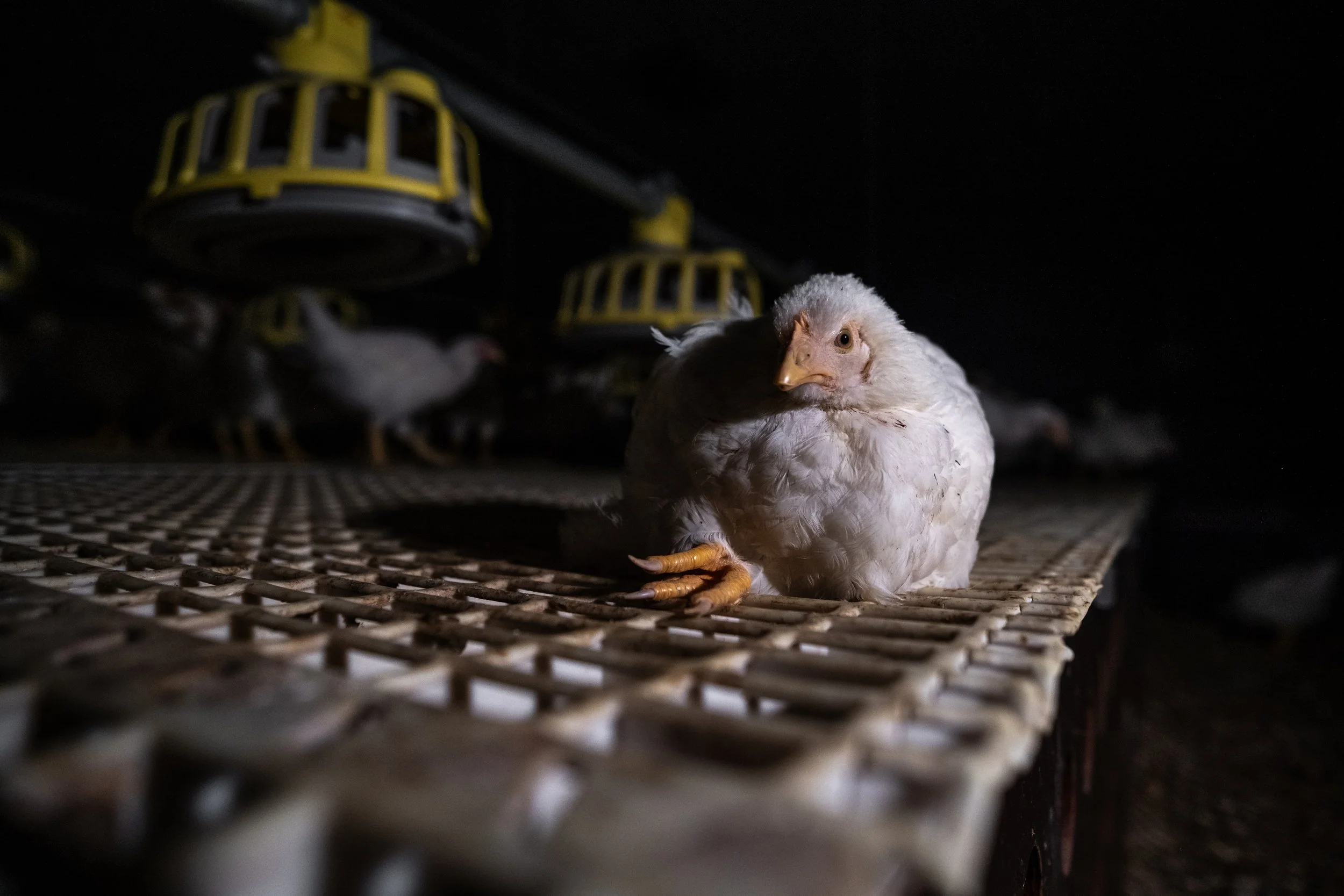
Canada’s Poultry Code of Practice ignores one of the biggest sources of suffering for chickens raised for meat: genetic selection for unnaturally rapid growth.
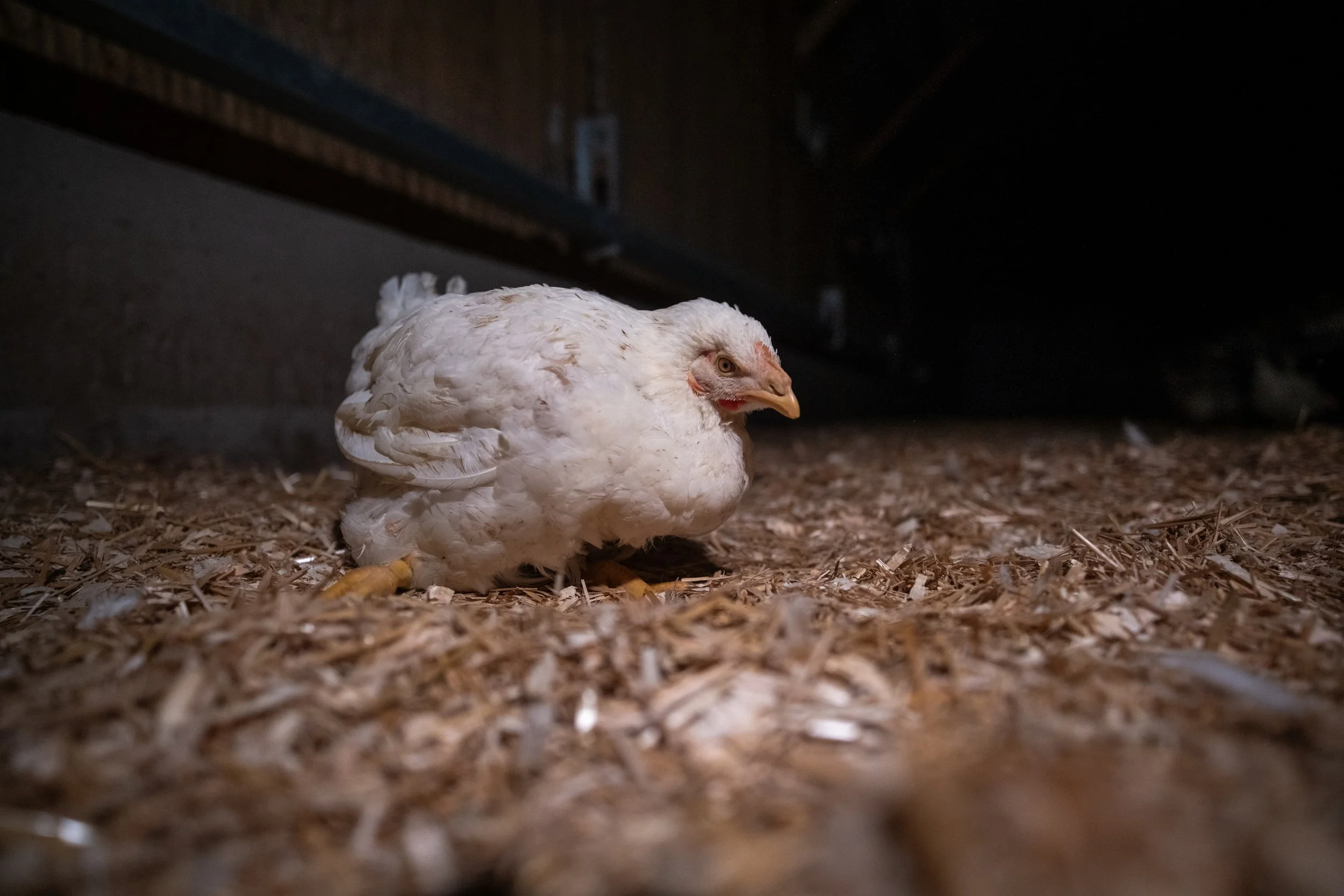
Chickens raised for meat (also known as “broiler chickens") are bred to grow so fast that many are left in chronic pain, struggling to walk, stand, or even support their own bodies. This extreme growth causes widespread lameness, heart failure, and weakened immune systems—problems that are predictable outcomes of the system itself.
A short life in barren barns
The Poultry Code allows these birds to be kept in barren barns with little to no opportunity to behave naturally. Chickens can:
Be confined with no enrichment;
Be given as little as four hours of darkness in a 24-hour day;
Be killed using methods such as blunt force trauma, decapitation, or ventilation shutdown.
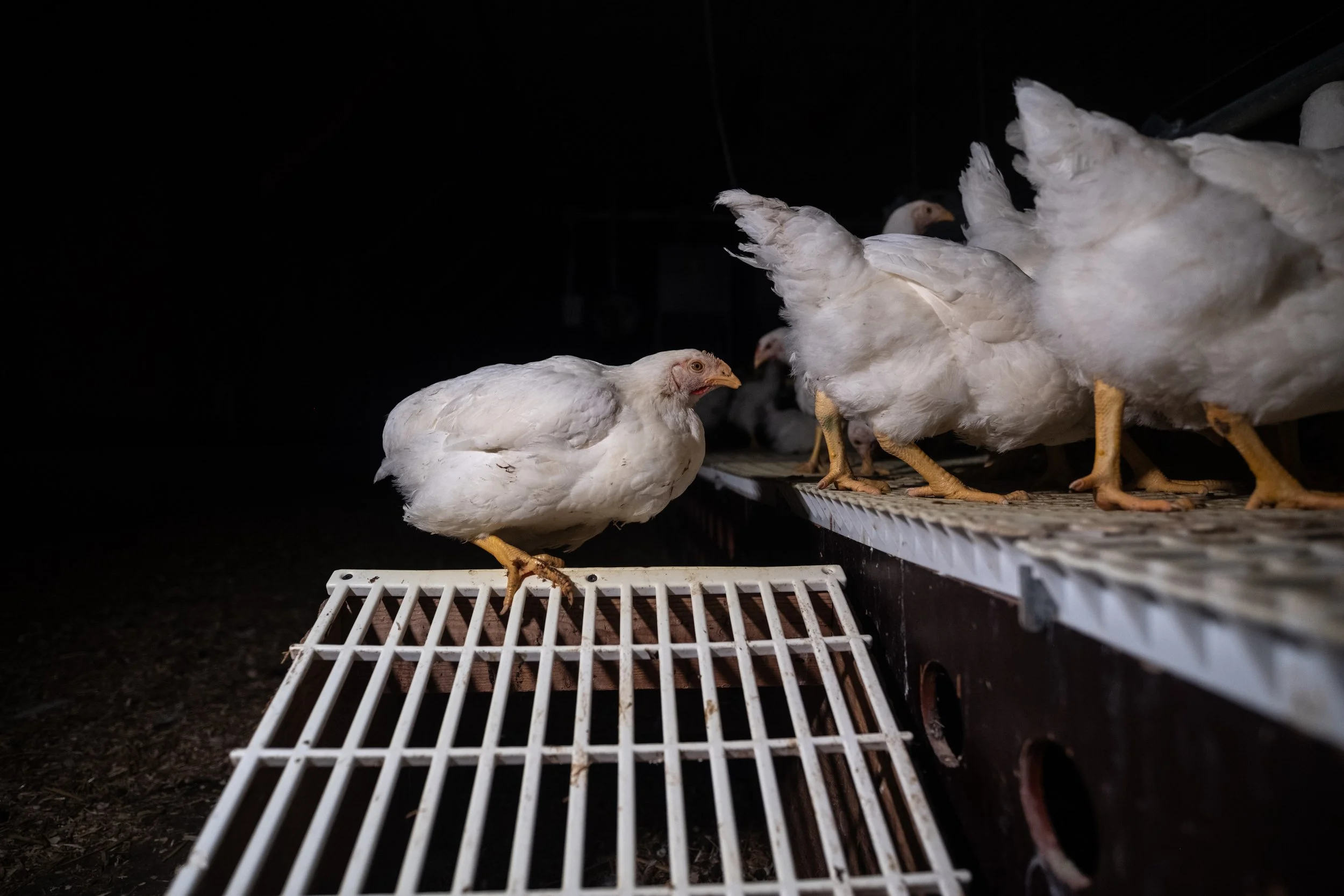
The Poultry Code Protects Industry Convenience, Not Animals
Better standards already exist elsewhere. Programs like the Better Chicken Commitment (BCC) and Global Animal Partnership (G.A.P.) set clear, science-backed requirements that significantly reduce suffering. These standards require slower-growing, higher-welfare breeds; at least eight hours of continuous light and six hours of uninterrupted darkness each day; and more humane slaughter methods that avoid stressful pre-stun handling.
While the Poultry Code protects industry convenience, BCC and G.A.P. show what real animal welfare looks like—and prove that Canada’s standards don’t have to be this low.
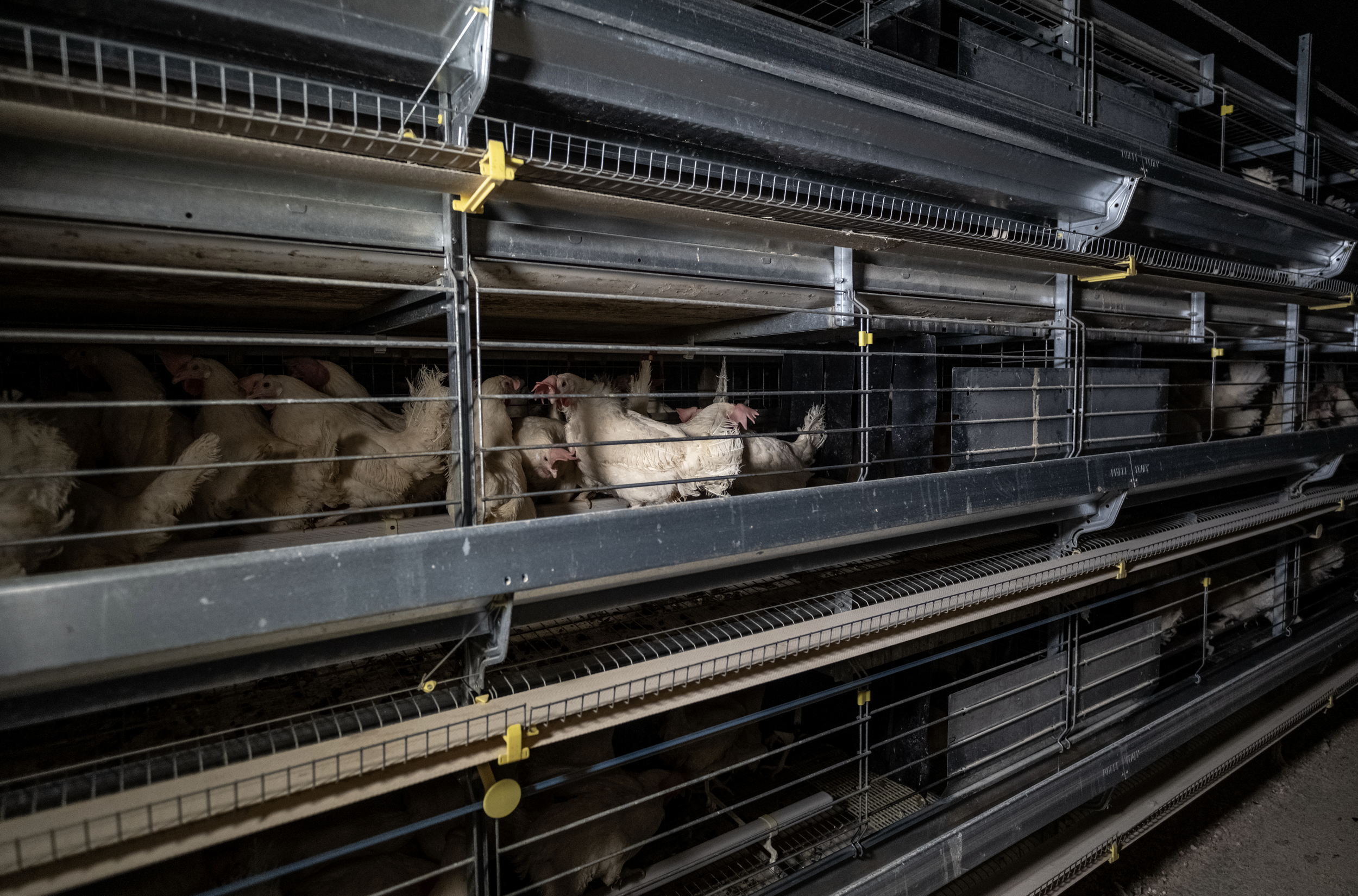
Inside Canadian Poultry Farms

2014 Hybrid Turkeys
Mercy For Animals Canada
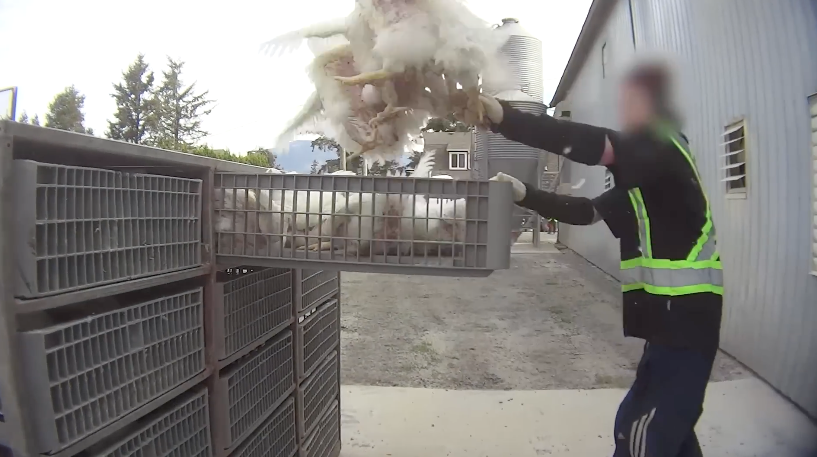
2017 Elite Farm Services
Mercy For Animals Canada